Social Media Addiction: Finding a Healthy Balance
The article explores how excessive social media use can affect students’ concentration, communication skills, academic performance and emotional well-being. It also suggests practical ways to build healthier digital habits, including screen-time limits, turning off notifications and spending more time on hobbies, family and real-world interactions.
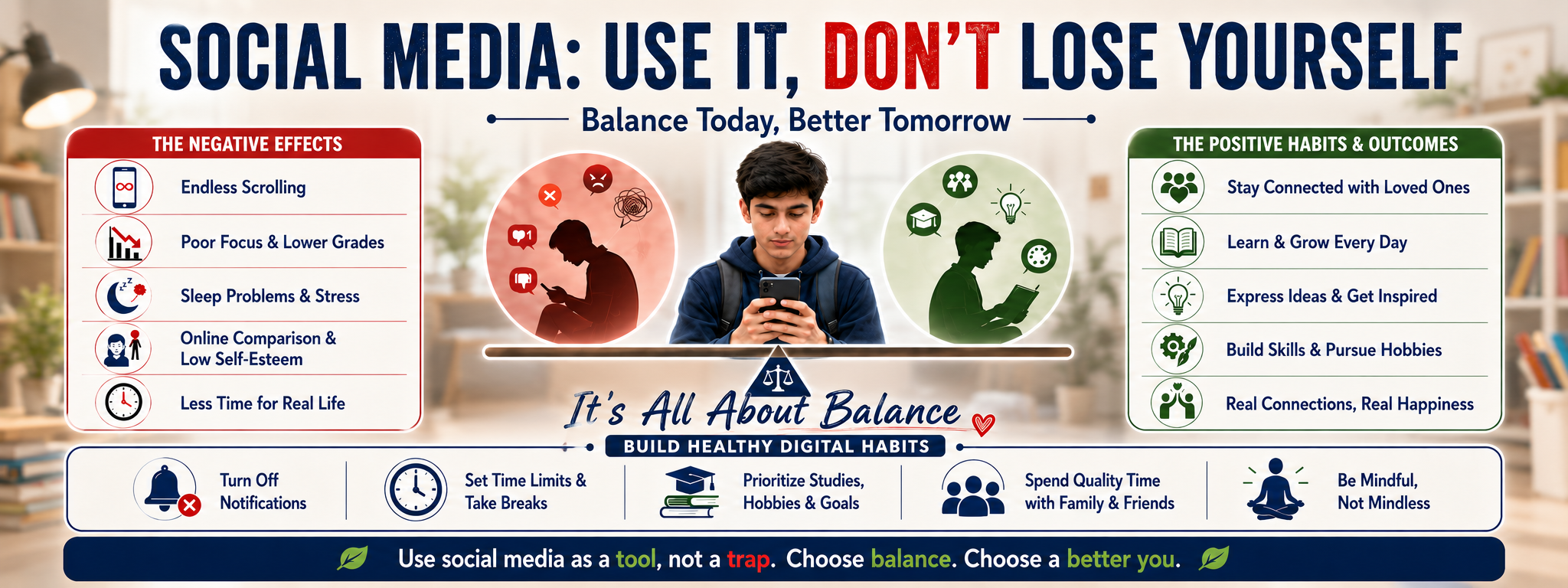
Social media has become an essential part of modern life. It allows people to communicate instantly, exchange ideas, learn new skills, follow current events and stay connected across distances. For students, these platforms can support creativity, collaboration and self-expression. However, the same tools can become disruptive when online activity begins to dominate time, attention and everyday routines.
The term “social media addiction” is often used casually, but frequent use alone does not necessarily mean that a person is addicted. The real concern begins when someone feels unable to control their usage, repeatedly checks their phone without a clear purpose, or continues using social media despite negative effects on sleep, studies, relationships or emotional well-being. This pattern is more accurately described as problematic or compulsive social media use.
Adolescents may be especially vulnerable because social approval, belonging and comparison play a strong role during the teenage years. Notifications, endless scrolling, personalised recommendations and short-form videos are designed to keep users engaged. As a result, a quick check can quietly stretch into a long session. Fear of missing out, pressure to respond immediately and the desire for likes or validation can make it difficult for students to disconnect.
Excessive use may affect concentration, time management and sleep. Constant switching between studies and social media can interrupt focus, while late-night screen use may reduce the quality of rest. Online comparison can also create unrealistic expectations about appearance, success and lifestyle. In some cases, students may encounter cyberbullying, misinformation or content that negatively influences their confidence and mood. These effects are not the same for everyone, but they should not be ignored when online habits begin interfering with daily life.
Healthy digital habits begin with awareness rather than punishment. Students can turn off non-essential notifications, use app timers and keep their phones away during study sessions, meals and bedtime. Setting specific times for social media is often more effective than checking it throughout the day. Replacing mindless scrolling with sports, reading, music, art, outdoor activities or face-to-face conversations can also restore balance. Even a short digital break can help a person understand whether they are using social media intentionally or simply reacting to habit.
Parents and schools also have an important role. Instead of relying only on strict restrictions, adults should encourage open conversations about online pressure, privacy, cyberbullying and responsible sharing. They should model the same habits they expect from young people by creating device-free family time and respecting screen-free spaces. When social media use causes persistent distress, sleep problems, falling academic performance or withdrawal from real-life relationships, support from a counsellor or mental-health professional may be helpful.
Social media itself is not the enemy. It is a powerful tool, and its value depends largely on how it is used. The goal is not to abandon the digital world, but to prevent it from controlling our time and attention. When students learn to use technology with purpose, boundaries and self-awareness, social media can remain a useful part of life without replacing the experiences, relationships and responsibilities that matter beyond the screen.