Positive Parenting: Raising Confident and Resilient Children
The article explains how positive parenting combines affection, clear boundaries, respectful communication and consistent guidance to support a child’s overall development. It highlights the importance of listening, praising effort, encouraging independence and teaching children how to manage emotions and learn from mistakes. The central message is that strong parent-child relationships help raise confident, responsible and resilient individuals.
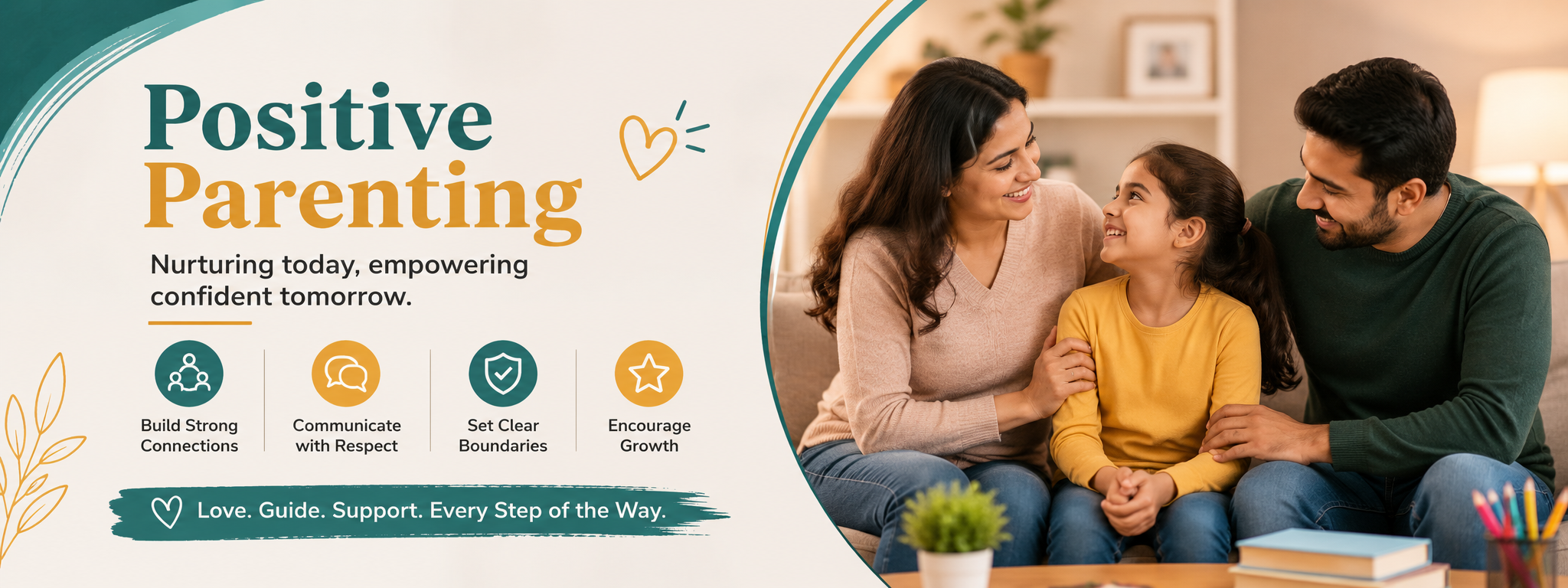
Parenting is deeply rewarding, but it can also be demanding. Every parent faces moments of uncertainty while trying to guide a child, set boundaries and respond to difficult behaviour. Positive parenting offers a balanced approach. It focuses on building a secure relationship with the child while using clear expectations, respectful communication and age-appropriate discipline.
Positive parenting does not mean allowing children to do whatever they want. It means being warm and supportive while remaining firm and consistent. Children feel safer when they understand what is expected of them and know that rules are applied fairly. Instead of relying on fear, threats or harsh punishment, parents can explain consequences, encourage problem-solving and help children learn from their choices.
Connection is at the heart of this approach. Children are more likely to listen and cooperate when they feel seen, heard and valued. Simple habits such as giving undivided attention, asking open-ended questions and listening without immediately judging can strengthen trust. Even a few minutes of meaningful conversation each day can help parents understand what a child is experiencing at school, with friends or online.
Positive attention also shapes behaviour. When parents notice effort, kindness, honesty or responsibility, children learn which actions are valued. Praise is most effective when it is specific. Instead of saying only “good job,” a parent might say, “I noticed how patiently you completed that task,” or “You were thoughtful when you helped your sibling.” This encourages children to recognise their own progress rather than depending only on approval.
Healthy development extends beyond academic success. Children need nutritious food, physical activity, sufficient sleep and opportunities for play. They also need support in understanding emotions, coping with disappointment and managing frustration. Parents can model these skills by remaining calm during conflict, naming emotions and showing that mistakes can be corrected. A child who sees adults apologise, reflect and try again learns that growth is possible.
Consistency is equally important. Rules should be simple, realistic and appropriate for the child’s age. Parents should explain the reason behind a boundary and follow through with reasonable consequences. When adults respond differently each time, children may become confused or test limits more frequently. A predictable home environment helps develop self-control, accountability and confidence.
Parents can also create everyday opportunities for independence. Allowing children to make small choices, complete age-appropriate responsibilities and participate in family decisions develops competence. Solving every problem for a child may provide immediate relief, but guiding them to think through options prepares them for future challenges. Support should gradually shift from doing things for children to helping them do things for themselves.
There is no perfect parent and no single method works in every situation. Positive parenting is a continuing process of observing, adjusting and learning. It asks parents to focus not only on stopping unwanted behaviour, but also on teaching the skills children need to behave differently next time.
Ultimately, positive parenting helps children grow into secure, empathetic and responsible individuals. A home built on affection, structure and mutual respect becomes more than a place of discipline. It becomes a training ground for resilience, emotional intelligence and healthy relationships. When children know they are loved unconditionally and guided consistently, they are better equipped to face the world with confidence.