Early Education Today: Building Strong Foundations for Life
This article explores how early education can respond to the realities of childhood today by balancing play, emotional security, inclusive learning, thoughtful use of technology and meaningful collaboration between families and educators.
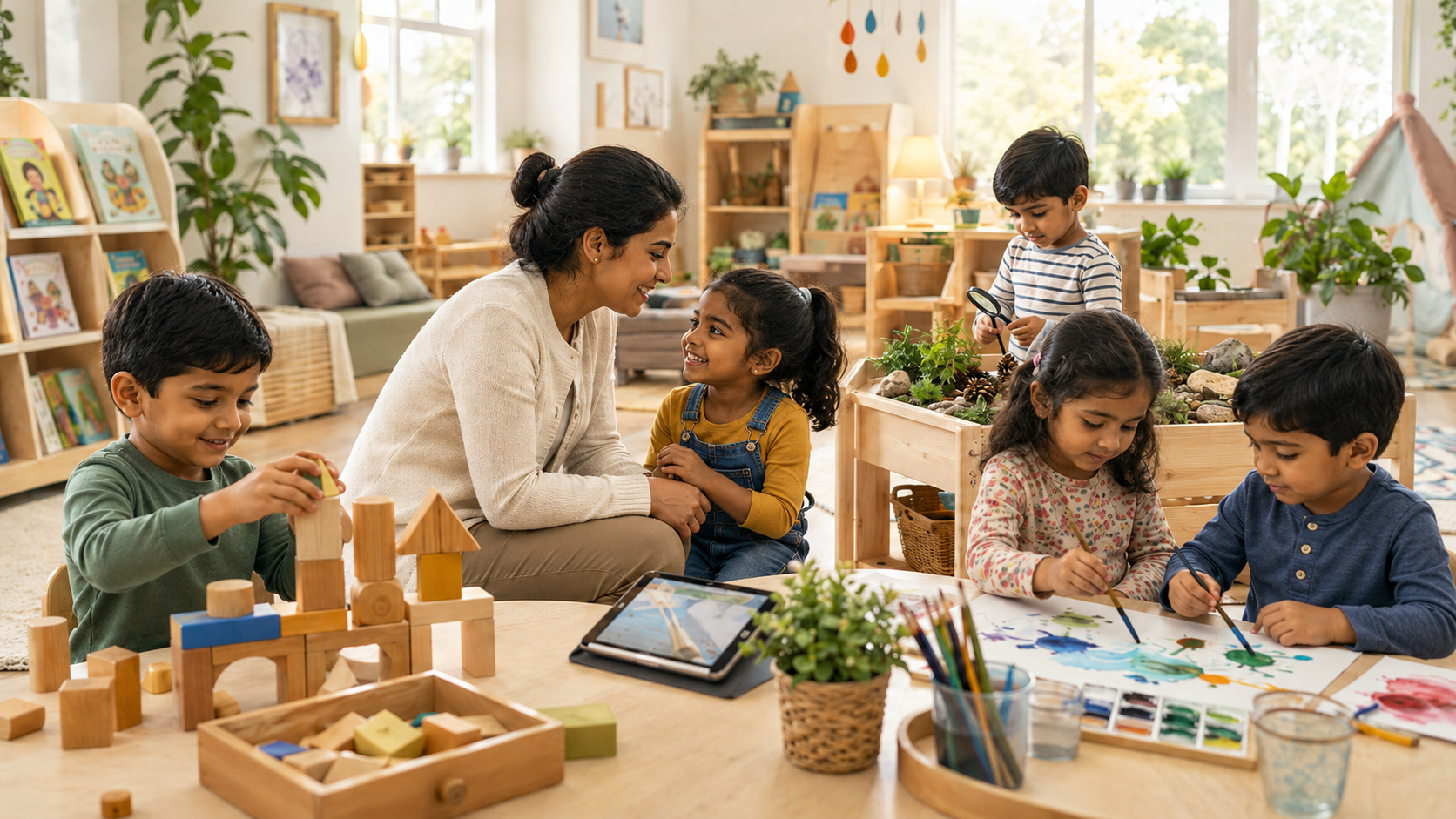
Childhood Is More Than Preparation
Early childhood is not merely a waiting room before formal education begins. It is a meaningful stage of life in which children form relationships, develop a sense of identity, explore their surroundings and begin to understand how the world works. Experiences during these years influence language, confidence, emotional security, physical development, social behaviour and the ability to learn.
In today’s rapidly changing world, early education must do more than prepare children to read, write or complete worksheets. Young learners are growing up amid technological change, busy family routines, diverse communities and increasing exposure to digital media. They need environments that protect the joy of childhood while helping them develop curiosity, communication, creativity, empathy and independence.
A child should not be viewed as an adult-in-training or a container to be filled with information. Children are active learners with individual interests, abilities, cultures and ways of expressing themselves. Quality early education recognises this individuality and creates space for children to ask questions, make choices, attempt tasks, make mistakes and discover solutions.
Play Remains the Heart of Learning
Although the world around children has changed, the way young children learn best has not. They learn through play, movement, conversation, observation, repetition and hands-on exploration. Building with blocks introduces balance, measurement and problem-solving. Pretend play strengthens language, imagination and social understanding. Music, art, dance, storytelling and outdoor activities support expression, coordination and creativity.
Play-based learning does not mean learning without purpose. Well-designed play experiences allow educators to introduce early literacy, numeracy, scientific thinking and communication in ways that feel natural and meaningful. Sorting objects, creating patterns, caring for a classroom plant, retelling a familiar story or working together to construct a model can build multiple skills at the same time.
In a climate of early competition, there is often pressure to introduce formal academics too quickly. However, excessive worksheets, memorisation and performance-based comparison can narrow children’s learning experiences. Early education should build readiness through curiosity, confidence and strong developmental foundations rather than by pushing children into age-inappropriate academic routines.
Growing Up in a Digital World
Digital technology is now part of children’s everyday environment. Used thoughtfully, it can support storytelling, creativity, communication and access to new experiences. A short interactive activity, a virtual conversation with a family member or a teacher-guided digital story can add value when it has a clear purpose.
However, technology should enhance learning rather than replace human connection. Young children still need face-to-face conversation, physical movement, sensory exploration, outdoor play and time with caring adults. Passive or unsupervised screen use should not crowd out sleep, family interaction, imaginative play or active learning.
Early digital education should therefore focus less on operating devices and more on forming healthy habits. Children can gradually learn to ask an adult before using a device, handle technology responsibly, take regular breaks and understand that not everything on a screen is real. Parents and educators also need to model balanced digital behaviour, because children learn as much from adult habits as they do from instructions.
Emotional Well-being Is Part of the Curriculum
Modern early education must give emotional development the same importance as academic learning. Children need language to identify feelings, express needs, manage frustration and seek help. Everyday classroom experiences such as waiting for a turn, joining a group, resolving a disagreement or coping with an unsuccessful attempt are valuable opportunities to build self-regulation and resilience.
Educators can support this development through predictable routines, calm transitions, stories about emotions, breathing exercises, cooperative games and respectful conversations. A child who feels safe and understood is more likely to explore, participate and learn.
Behaviour should also be understood as communication. A child who becomes unusually quiet, aggressive, restless or reluctant to participate may be expressing stress, fear, fatigue, sensory discomfort or difficulty adjusting. Instead of immediately labelling the behaviour as disobedience, adults should observe patterns, speak with caregivers and respond with patience and appropriate support.
Inclusive Learning for Every Child
Today’s early childhood classrooms bring together children from different linguistic, cultural, social and family backgrounds. They may also include children with different learning profiles, physical abilities, communication needs and sensory preferences. Inclusion cannot be treated as an additional programme; it must shape the design of the learning environment itself.
An inclusive classroom offers multiple ways to participate. A child may respond through speech, gesture, drawing, movement or play. Learning materials should represent different cultures, abilities and family structures without turning diversity into a once-a-year celebration. Accessible spaces, flexible routines and collaboration with specialists can help every child experience belonging and meaningful participation.
Children should develop pride in their own language and culture while learning to appreciate others. Simple experiences such as multilingual songs, family stories, regional games, community visitors and books featuring diverse characters can nurture respect, fairness and a wider understanding of the world.
Learning to Care for the World
Sustainability in early education should be practical rather than abstract. Young children can learn to care for plants, avoid wasting water, reuse materials, sort classroom waste and treat animals and shared spaces with respect. These small actions introduce responsibility and show that even young learners can contribute to their community.
Nature-based experiences are especially valuable in an increasingly indoor and screen-filled world. Gardening, observing insects, collecting leaves, noticing changes in weather or exploring natural textures can strengthen curiosity, physical well-being and environmental awareness. Such experiences help children form a personal connection with the natural world before they are expected to understand larger environmental concerns.
Parents and Educators as Partners
A child’s learning does not begin or end in an educational setting. Families carry knowledge about the child’s routines, interests, language, health, relationships and responses to change. Educators bring expertise in observation, development and learning design. When these perspectives are shared respectfully, children receive more consistent support.
Parent partnership today can include regular conversations, digital communication, workshops, home-learning suggestions and collaborative goal-setting. However, communication should not become a stream of comparisons, constant performance updates or additional tasks for families. Its purpose should be to understand the child, celebrate progress and respond early when support is needed.
Educators also require continuous professional development. Early childhood teaching demands far more than affection for children. It requires knowledge of child development, play facilitation, inclusion, safeguarding, observation, language development, health, nutrition and responsible technology use.
Rethinking Progress and Readiness
Assessment in the early years should not resemble formal examinations. Children develop at different rates and may demonstrate understanding in different ways. Observation, conversation, work samples, photographs, learning stories and portfolios provide a richer picture of development than a single test or worksheet.
The goal is not to rank young children but to understand what they can do, what interests them and what support will help them progress. Readiness should include the ability to communicate, cooperate, follow routines, manage basic self-care, remain curious and approach new experiences with confidence. These capacities are as important as recognising letters or numbers.
Access to quality early childhood care and education must also extend beyond conventional classrooms. Preschools, nurseries, playgroups, childcare centres, community programmes and home-based initiatives all have a role to play. Whatever the setting, children need safety, responsive care, good nutrition, opportunities for play and adults who recognise their potential.
Building Foundations for an Uncertain Future
No one can predict exactly what knowledge or careers today’s young children will need in the future. What can be developed now are the foundations that help them adapt: curiosity, imagination, communication, collaboration, empathy, persistence and the confidence to keep learning.
Early education should therefore resist the race to make childhood more academic, more scheduled and more competitive. Its purpose is broader and more valuable. It should create secure, stimulating and inclusive environments in which children can explore ideas, build relationships, understand themselves and begin to participate responsibly in the world around them.
When early education respects the child, protects the value of play and responds intelligently to contemporary realities, it does more than prepare children for the next grade. It prepares them for life.
Reference Framework
This article reflects current guidance and themes from UNESCO on early childhood care and education, UNICEF on childhood in a digital world and balanced digital learning, WHO’s Nurturing Care Framework, and India’s emphasis on experiential, holistic and play-based learning during the foundational years.