Beyond the Classroom: Building Responsible Global Citizens
This article explains how Elpro International School prepares students to become responsible global citizens through international collaboration, digital and AI literacy, sustainability initiatives, community engagement and ethical leadership. It highlights the development of critical thinking, empathy, adaptability and social responsibility, helping learners contribute meaningfully to an interconnected and rapidly changing world.
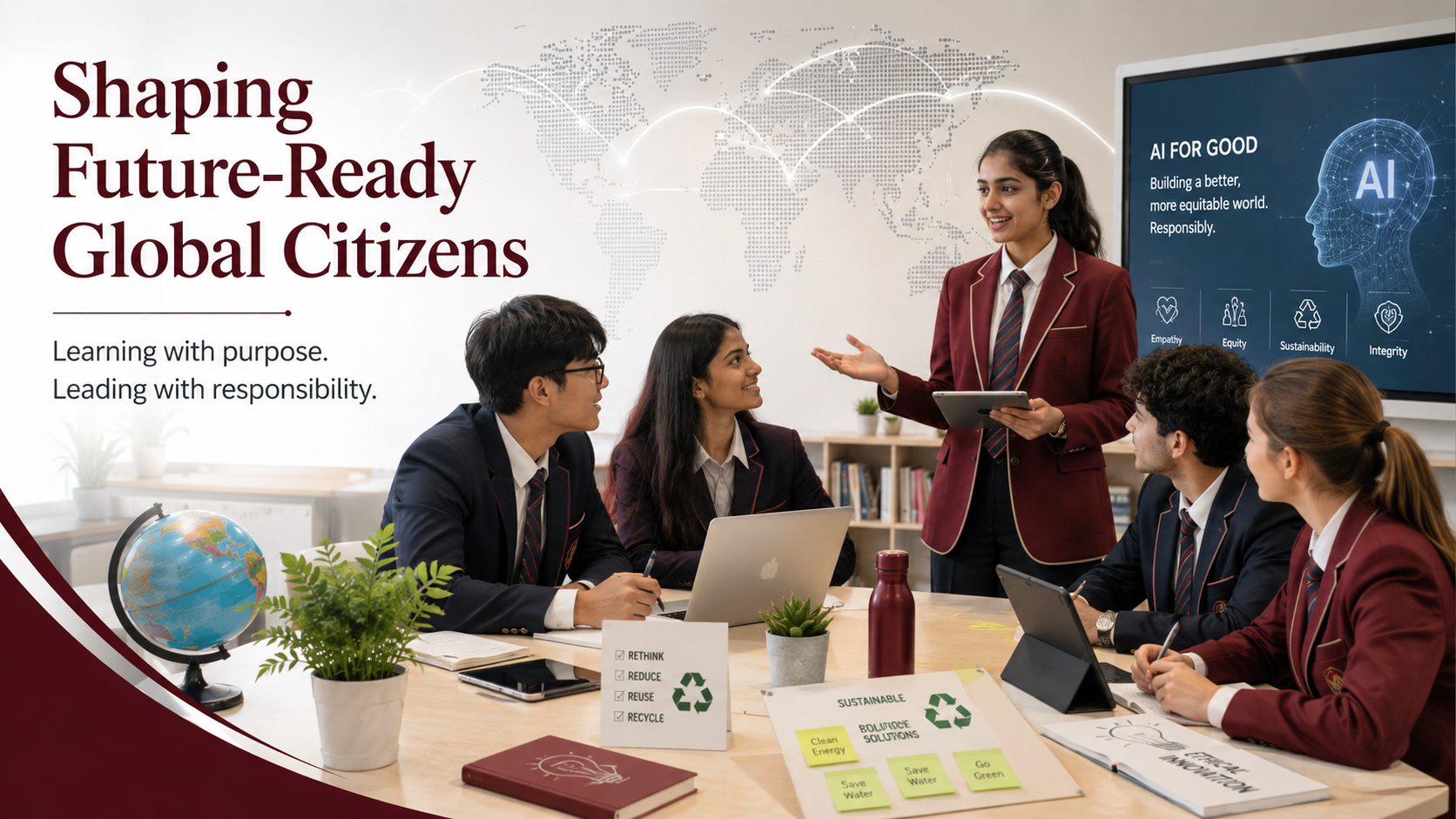
Developing a Global Perspective
Global citizenship begins with understanding that local actions can have global consequences. At EIS, students explore contemporary issues through multiple subjects and perspectives rather than studying them in isolation. Discussions, research projects, presentations and collaborative activities encourage learners to examine social, environmental, economic and technological challenges critically.
Students are encouraged to ask meaningful questions, analyse evidence and understand viewpoints that may differ from their own. This approach reflects the broader purpose of global citizenship education, which includes critical literacy, respect for diversity and active participation in building a more inclusive and sustainable world.
International exposure further strengthens this outlook. Through the Pangea initiative, EIS connects with more than ten schools worldwide under the theme of Compassion and Collaboration. These interactions provide opportunities for students to exchange ideas, understand different cultures and collaborate across geographical boundaries.
Such experiences help students recognise that global citizenship is not simply about travelling internationally. It is about listening with empathy, communicating respectfully and working with people from different backgrounds.
Digital Citizenship in the Age of Artificial Intelligence
Global citizenship now includes responsible participation in the digital world. Students encounter vast amounts of information through social media, online platforms and artificial intelligence tools. They must learn how to verify sources, identify misinformation, protect their privacy and use technology ethically.
At EIS, digital awareness can be integrated into research, classroom discussions and project-based learning. Students are encouraged to question how information is created, recognise possible bias and understand that AI-generated content must be evaluated rather than accepted automatically.
AI literacy is increasingly understood as more than knowing how to operate a tool. It also involves critical thinking about its accuracy, limitations, social impact and ethical use.
By developing responsible digital habits, students learn to become thoughtful creators and informed users of technology rather than passive consumers.
Sustainability Through Meaningful Action
Environmental responsibility is another essential dimension of global citizenship. At EIS, sustainability is translated from classroom learning into practical action through tree-plantation drives, conservation programmes, eco-awareness workshops and waste-management initiatives.
Students participate in plastic-waste collection, recycling campaigns and responsible e-waste disposal. These activities help them understand that sustainability depends on everyday decisions, including how people consume resources, manage waste and use technology.
Education for sustainable development and global citizenship is also reflected in the United Nations’ Sustainable Development Goal 4, which emphasises the knowledge and skills required to promote sustainable lifestyles, human rights, cultural diversity and responsible citizenship.
Rather than treating environmental awareness as a one-time event, EIS encourages students to view sustainability as a continuing responsibility.
Learning Through Community Engagement
Global citizenship begins in the immediate community. Students cannot be expected to solve international challenges without first learning to recognise and respond to the needs around them.
Donation drives involving clothing, books, toys and stationery encourage students to support under-resourced communities. These initiatives nurture empathy and reinforce the importance of dignity, fairness and shared responsibility.
Community service also helps students move beyond sympathy towards purposeful action. They learn to identify a need, organise resources, collaborate with others and evaluate the impact of their efforts. In this way, service becomes a meaningful learning experience rather than an isolated charitable activity.
Building Future-Ready Skills
The modern world requires students to work with people across cultures, disciplines and digital environments. Through collaborative projects, international interactions, leadership opportunities and social initiatives, EIS develops essential capabilities such as:
- Critical thinking and responsible decision-making
- Communication across cultures and perspectives
- Creativity and collaborative problem-solving
- Ethical leadership and social responsibility
- Digital and media literacy
- Adaptability, resilience and empathy
These skills prepare students not only for future education and careers but also for responsible participation in society.
From Awareness to Agency
An effective global-citizenship programme must go beyond helping students understand problems. It must empower them to act.
At EIS, learners are encouraged to take ownership of projects, express informed opinions and develop possible solutions to real-world challenges. Student agency helps young people recognise that their ideas and choices have value.
Whether they are participating in an international collaboration, leading an environmental campaign or supporting a community initiative, students experience citizenship as something they practise, not merely study.
Conclusion
At Elpro International School, preparing students for global citizenship means equipping them to navigate a complex and interconnected world with knowledge, empathy and responsibility.
Through international collaboration, digital awareness, environmental action, community engagement and ethical leadership, EIS helps learners develop into confident individuals who can engage thoughtfully with both local and global challenges.
The goal is not only to prepare students for successful careers. It is to prepare them to use their education with purpose, contribute meaningfully to society and help shape a more responsible, inclusive and sustainable future.